String of Hearts

String of Hearts:

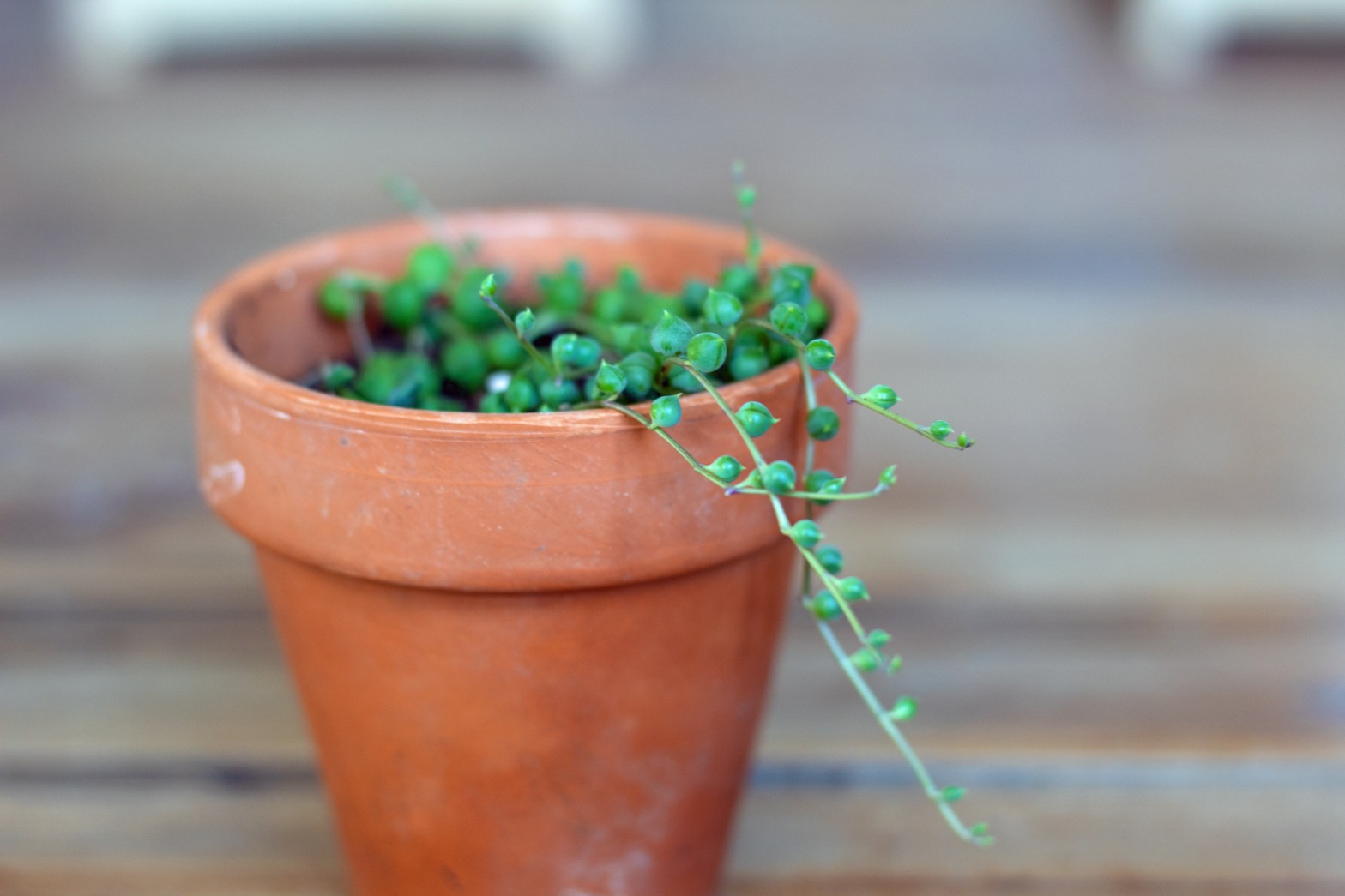
String of Hearts is one of my favorites! You might also know them by the name Rosary Vine, Chain of Hearts, or Hearts Entangled. This beautiful trainling plant cascades down the side of the pot with long delicate tendrils. The long strands tend to tangle but that adds to the uniqueness of the plant. I got my first String of Hearts from my cousin as a cutting. It did so well (until I overwatered it… keeping it real here folks) and it was so fun to watch it grow each little pair of leaves. 

Light:

String of Hearts handle bright indirect light the best. You might notice them growing faster or becoming more full if they get adequate amounts of light. If you keep them in the extremes you risk stunting their growth. Too much light or direct light can burn them while too little light causes their leaves to become sparse.

Watering:

This was my downfall with these plants. String of Hearts like to dry out between waterings. This helps avoid root rot. I was watering a bit too much and root rot set in. In the summer they can tolerate a bit more water than in the winter. Decrease the amount or frequency of watering when fall and winter comes your way. 

Humidity:

The average humidity of your house is just fine for the String of Hearts. If you increase the humidity levels your plant might grow faster than it otherwise would. 

Temperature:

String of Hearts are not too picky when it comes to temperature. They can tolerate temperatures from 40 degrees fahrenheit to upwards of 85 degrees. I wouldn’t recommend leaving them outside if the temperature drops much below 55 degrees. You will also notice that you need to water more often as the temperature rises. 

Fertilizer:

It is totally ok to fertilize your String of Hearts in its most active state. More than likely this means the spring and summer for you. There are tons of options in the way of fertilizer. Whichever you choose it is best to dilute it to half or quarter strength.

Toxicity: 

String of Hearts are non-toxic to little bellies. While they may not be toxic to pets, the long strands might attract some unwanted attention from your feline or fido.

Aloe Vera

Intro: 

Aloe Vera is one of those plants that I remember from my childhood. My neighbor had a huge plant he inherited from his mom. I loved that thing! It seemed to be the solution to all life’s ails. Aloe is a succulent with medicinal properties that is cultivated all over the world. 

Light: 

Sometimes when people think succulents they think lots of light like a cactus. This sometimes can be true but direct sunlight is not the way to go with aloe. These plants prefer bright indirect light as they can get sunburnt in direct light. (Kinda ironic huh!) When this happens they can turn reddish-purple. As aloes dry out they shrivel up and turn yellow. 

Watering:

It is best to water aloe very well but not often. They like a deep soak but be careful not to let the roots sit in water or soggy soil for too long. This can cause root rot. A good rule of thumb is to let the soil dry out on the top two inches and then water again. Outside the growing season like in winter you can wait 3 weeks or so to water. 

Humidity:

Aloe does not need any extra humidity like other houseplants and tropicals. They handle dry air like a champ. Whatever is comfortable for you inside your home will most likely be comfy for your Aloe Vera too. 

Temperature:

Aloe vera thrives in temperatures between 55 and 80°F (13 and 27°C). The temperatures of most homes or apartments are ideal for growing those little guys. 

From May to September, you can bring your plant outdoors without a hitch but do bring it back inside in the evening if nights are cold.

Aloes can be kept outdoors in full sun during the summer, when temperatures are above 70°F (21°C). Make sure to acclimate your aloe slowly when transitioning it from inside to outside in full sun. Otherwise, they will burn quickly. If nighttime temperatures drop below 60°​​​​​​​F (16°​​​​​​​C), bring them inside.

Fertilizer:

These guys don’t need much in the way of fertilizer. You can fertilize once a monthly half strength in the growing season. No need to worry about adding fertilizer in the winter. 

Toxicity: 

Aloe Vera is a great plant to use as a topical treatment for minor skin irritations but ingesting aloe especially in high quantities can be toxic causing nausea and vomiting. Use it carefully! 

What’s in a Name?

The green spaces that surround us and the animals that live within them stir something deep within humans. Something about snow-covered, mountainous landscapes moves us to question our place within the world. Serene old-growth redwood forests full of marbled murrelets, carpeted in ferns prompts the human mind to question its impact on the Earth. Even vast deserts move humans in deep and complex ways. Many of us attribute this sensation to something spiritual, something more than we can understand, some greater being. For those of us who do attribute this feeling to God, it is important to frame our understanding of the spaces we hold most dear. Often we use the words ‘nature’ and ‘creation’ interchangeably when speaking about the world around us. The words we choose can play a huge part in shaping our thoughts and beliefs about this planet we call home and the entity we believe to have spoken it into being.

Within the biblical text, the Hebrew people always call the world around their creation or the created order rather than nature. This begins to make sense to us when we think about the meaning of the word ‘nature’ and the ways we use the words that come from it. The word nature brings us other words like ‘naturally’ and ‘natural’. Usually, when we use a word like one of these we mean something that happens on its own, without our interference. Something that occurs naturally does so because of the design of a system or in some other self-sustaining way.

Have you ever spent so much time inside, much as I feel in the midst of this global pandemic, that you have an urge to go outside, put your feet in the dirt, and take a deep, long breath of the air? In some ways, we feel isolated from nature and have a desire to “get back” to it. Humanity sees itself as something separate from the natural world around it. It is almost as if humans see themselves as something that does not belong in the surrounding world at all. Why would we insist on “leaving no trace” if we believed otherwise?

The ancient people of God referred to the world around them as creation for various reasons. These people held that the world was a creation because it was unable to exist on its own and needed a sustainer otherwise known as a Creator. Interestingly, and in some ways, more importantly, the Hebrews saw themselves as creatures inhabiting this creation along with the other creatures which were created. All the creatures of the world were believed to have been created for the pleasure of God. 

Maybe a simple change of our language can help us to reshape our outlook on the world around us and the God that created it. By calling the world creation we are acknowledging that all that we know to exist was created by God and is sustained by God. We will also begin to admit and acknowledge that we as humans are a part of this creation. The mountains and trees around us did not create themselves, do not sustain themselves, and humans are not different but part of this created world. 

Thinking of ourselves as a part of creation gives us a new outlook on our life atop this floating space rock. The psalmist beautifully depicts creation in the 104th Psalm. Take a little time out of your day, find a quiet place outside, and read these words with a new lens. We are not a natural occurrence on this planet but rather a created being, sustained by the Maker of the heavens and the Earth itself. 

If you want to learn more about creation, environmental stewardship, and the biblical perspective for both, check out Redeeming Creation: The Biblical Basis for Environmental Stewardship by Fred Dyke, David Mahan, Joseph Sheldon, and Raymond Brand. I highly recommend it!

Let’s Talk About Watering

Water is a critical part of life as we know it. All living organisms require water to survive. You and me as well as your houseplants long for water in order to carry out some essential processes in our bodies and stems. Water is used in many different ways but we can narrow it down to four categories. After we talk about these four categories we will talk about your plant babies, how they use water and we sometimes abuse them with water.

Category #1: Solvent

Water is made up of two Hydrogen ions and one Oxygen ion. The hydrogen ions are positively charged while the oxygen ions are negatively charged. This means that a molecule of water shares its hydrogen ions readily with other molecules containing oxygen. H2O attracts both positive and negative ions due to the charge of its molecules of oxygen and hydrogen. Positive ions are always attracted to the oxygen molecules and negative ions are always attracted to the hydrogen ions. This affinity for sharing ions makes water very good at dissolving compounds. An example of this would be when water is used to break down food into glucose which can be used for energy. A plant does this during photosynthesis.

Category #2: Temperature Buffer

There are a vast array of chemical reactions that take places in the cells which are temperature sensitive. Enzymes that are catalysts for chemical reactions are heat-sensitive and will only do their job if the temperature is just right. Wate is used to help an organism regulate temperature. It takes a lot of energy in the form of heat to raise the temperature of water. A large quantity of heat is absorbed by water without affecting the temperature of the organism which allows chemical reactions to proceed uninhibited. 

Category #3: Metabolite

The total of chemical reactions occurring within an organism is called metabolism. Water is a chemical involved in reactions within an organism and can be labeled as a metabolite. During photosynthesis, water splits into its hydrogen and oxygen atoms. These two atoms are used or released. They hydrogen is used in a chemical reaction to produce glucose which feeds the plant. In animals water is used in respiration. Water helps split atoms and move waste products out of the body as a part of the respiration cycle.

Category #4: Living Environment

A bunch of organisms need water to survive. Fish for example need water to breathe. They utilize water to absorb the dissolved oxygen and without water they could not access the oxygen needed to breathe. As we have discovered, water is a good temperature buffer. This means that organisms can live in water even if the air temperature fluctuates drastically. Because water takes a lot of heat to change its temperature, the water allows organisms an environment with a stable temperature. 

So how do plants use water and what happens when I don’t use water the right way?

The chemical reaction plants use sunlight to create energy for themselves is called photosynthesis. Water is one reactant and carbon dioxide is the other during this process. These two compounds react in the presence of sunlight to generate glucose and oxygen which the plant uses for energy and expels respectively. Water is utilized by the plant to transport minerals around the plant almost in the same way blood moves in our bodies. Water is responsible for Turgor pressure in the plant. This is almost like a hydraulic system in the body of the plant. When Turgor pressure is low the plant becomes soft and wilts. When the Turgor pressure is adequate the plant stands tall and springs back when moved. Water also evaporates from the leaves of the plant allowing the plant to stay cool. 

Water is absorbed through the roots of most plants. In the root the water moves into the xylem which is like a highway system to the rest of the plant. When water reaches the leaves of a plant it exits through pore-like openings in the leaves called stomata. Sometimes we see small drops of water on the tips of the leaves of our plants. This is water leaving the stomata. When the summer comes and it heats up the plant loses water out of its stomata at a faster rate. This is called transpiration. If the humidity is higher the evaporation is slower because the water can not move into the atmosphere as easily because there is already lots of water in the air. Plants that enjoy a wetter environment or need lots of water will benefit from a more humid environment because it loses water more slowly. 

When roots do not have access to oxygen, like when they sit in soggy soil for too long, they begin to die. The longer the roots go without oxygen the more damage is done. If a root dies it is no longer capable of carrying water, oxygen, and nutrients to the rest of the plant via the xylem. Waterlogged roots are more susceptible to fungi that cause root rot and can kill plants. If a plant has rotten roots it is incapable of carrying water to the rest of the plant. If you are not aware that your roots are rotten then from the top your plant may look like it needs more water. The roots are not functioning well after all. Once root rot occurs there is no way to reverse it. 

The best way to prevent over watering is to use your finger, a trowel, or a moisture reader to check the soil deeper in the pot. The soil at the top of the pot can be deceptive. Some find it helpful to lift the pot in order to judge its water content. A heavy pot means lots of moisture and a light pot means some water is needed. It will take some time to learn each plant and their needs. 

Water is abundant on this planet and works in many aspects of life here. Our plants love water but too much can damage them long term. Water is essential to the health of every plant. That is why it is so important for us to master watering or plants well. It is ok to make mistakes as long as we learn from them!
Spider Plant

This is one of the most common plants I run into as I am out and about, I would say second to the Pothos. These plants are known as Spider plants or Airplane plants. They get this name because the plantlets they produce look like little spiders or planes drifting through the sky. I have had mine for over a year and it has a handful of cute plantlets hanging off of it. Spider plants are so easy to care for and are the perfect addition to your urban jungle.

Light: 

Spider plants tolerate low light conditions very well. Most Spider plants have beautiful yellowish white variegation on the edge of the leaves. This will become more prominent if you have your plant in a spot with indirect light. These variegations also make the plant prone to scorching so take care to keep it out of direct light. 

Watering:

Spider plants prefer to dry out in between waterings. If the soil stays wet for too long root rot might develop. These plants develop large, tuberous roots that take up a lot of room in the pot. This often causes water to flow right through before the plant can even soak up much water at all. I like to put my spider plant in the sink or the bath and fill it up just a bit. Allow the plant to soak up the water for about 20 minutes and set it back to dry out.

Humidity:

This plant is fairly forgiving when it comes to humidity. They can do just fine with low humidity but like with most plants, it will flourish in a more humid environment. If you see brown tips on the edges of your plant, low humidity might be to blame. One remedy is to mist your plant. Be warned, misting does bring up the humidity a little but also makes your plant susceptible to fungus and bacteria.

Temperature:

These are truly the perfect house plants. They thrive well in temperatures much like your home averaging between 60-80 degrees Fahrenheit. Spider plants can tolerate lower temperatures at night but prefer to stay above 55 degrees Fahrenheit.

Fertilizer:

Feed these plants during their growing season which is the spring and summer. No need to fuss with food in the fall and winter. The plant slows its growth in this season naturally. Your plant will be happy if you feed it about every two weeks but keep a close eye, over fertilizing can case browning in the leaf tips. 

Toxicity: 

Hooray! Spider plants are non-toxic to humans and pets.

Repotting 101

Repotting can be a little intimidating but with some practice and a few tips you will be ready to give your green friends a boost!

Often we only think of repotting as the thing to do when you find roots coming out of the bottom of your precious plant pot. Repotting can be so much more! Repotting also looks like giving our plants a new batch of soil, not just a new planter.

It is widely known that plants grow much better with a little food throughout its growing season. Some plant parents choose to use fertilizers of various kinds in the spring and summer. While this will give your Bromeliad a boost and your Monstera a nice meal, not all growers choose to use additional fertilizer. This is totally ok because plants can find some of the nutrients they need in the pot they live in. This is why it is super important to put them in quality soil. After a while, our plants eat up all the nutrients in their pot and its the least we can do to top them off. 

This is where repotting comes in! It is good to change the soil out in your planters every 12 to 18 months. This totally depends on how fast your plant is growing. If they are a quick grower like Pothos, Aloe Vera, Philodendron, or Spider Plants (just to name a few) you might need to change the soil closer to the year mark. Slower growers like Cacti and various Succulents won’t need repotting for much longer. 

If it is time to repot you might notice:

  • Roots growing through the drainage hole in the bottom of the pot
  • The plant is being pushed up by all the roots
  • Your plant is growing slower than normal
  • There is noticeable mineral build up on the side of the pot
  • Your plant is top heavy and easily topples
  • The plant dries out quickly and needs water more often

When repotting it is best to go up 1-2 inches in size. If you go more than 2 inches it is easy to add more water. There is more space and soil after all! But a small plant with more soil in a big pot and lots of water can rot the roots of your precious plant.

The perfect time to repot is in the early spring before the growing season starts. This will give your plant plenty of time to adjust to its new home.

We have talked a bunch about repotting but how do you do it?

You’re in luck! We have an easy step by step guide.

Gather your materials:

  • Your houseplant
  • New soil
  • A watering can
  • Sharp scissors or pruning shears
  • A pot (the same one or one 1-2″ larger)

Let’s Get Started!

It is a good idea to give your plant a good drink the day or two before you repot. This can help minimize shock.

  1. Flip you plant over on its side and hold it gently by the base of the stems. Tap the bottom and give your plant a gentle wiggle until the root ball slides out of the pot.
  2. Loosen the roots with your fingers and prune off any dead roots. These appear dark in color as well as soft and squishy. If your plant is root bound, gently pull the roots apart and give them a trim. This will promote root growth. It is ok if you rip them apart a bit, just be as gentle as can be!
  3. Remove almost all the old potting mix if you are just refreshing the soil. If you have picked a new pot, make sure your new pot has a drainage hole and if not add a drainage layer to keep excess water off the roots.
  4. Pour brand new soil in the pot and pack it down gently
  5. Set your plant on the fresh layer of soil and center it inside the pot.
  6. Add soil around the plant until it isn’t wobbly in the pot. Make sure not to mound the soil too high or watering will become difficult. 
  7. Water your plant and get ready for a happy growing season!

Fiddle Leaf Fig

The Fiddle Leaf Fig is a beautiful statement plant that adds dimension to any space. My FLF is in the shape of a tree with all its foliage at the top of its trunk like stem. My sweet husband bought me this plant when we lived in California but we moved not too long after we got it. We stuck it in our car and drove halfway across the country to our new home. It is doing well after the adjustment but still has a crook in its stem from our little car.

Light:

When you find a place your FLF likes don’t even think about moving it! They do best with bright, filtered light like that in an east facing window. Any direct light can scorch its leaves. You will notice that your plant may lean toward the sun, that is totally natural, just rotate it every few months. 

Water:

Watch your plant carefully and when the top inch of soil becomes dry give the plant a good drink. Water it until you see water pooling in the saucer. Don’t let your FLF sit in the water for too long as it can cause root rot. Lack of water can cause the leaves to go limp and turn yellow or brown before they drop off altogether. 

Humidity:

The best way to keep you FLF happy is to keep it in a place that is as humid as you can get. They are native to the tropics after all. Eventually they get used to the climate of your home. 

Temperature:

The warmer you can make your FLF the better usually. Though much like with humidity, your fig will eventually get used to your home. Beware of any drafts from nearby windows or air conditioning units. This can lead to the demise of your beloved FLF.

Fertilizer:

Feel free to feed your fig once in the spring time and about every month in the summer. No need to feed in the fall and winter. If you over fertilize, your fig may become leggy or even die so don’t over do it.

Toxicity:

Fiddle Leaf Figs are mildly toxic to humans and pets. Ingestion can cause mouth and stomach irritation and even vomiting. The sap from a FLF is irritating to the skin so if you are pruning leaves make sure to wear gloves and wash your hands immediately afterward. 

Bonus:

The Fiddle Leaf Fig has large, interestingly shaped leaves. These collect dust rather fast so it is necessary to wipe them clean with a damp cloth in order to help the plant photosynthesize correctly. You can add one teaspoon of dishwashing detergent to a gallon of water to aid in your cleaning process as well as to help protect your plant against insects. 

FLF find a place they thrive and don’t like to be moved. If you move your plant, especially if it is a drastic light or temperature change, be aware that your fig may drop some leaves until it is acclimated again. This process can take two or three weeks. 

Polka Dot Plant

Intro: 

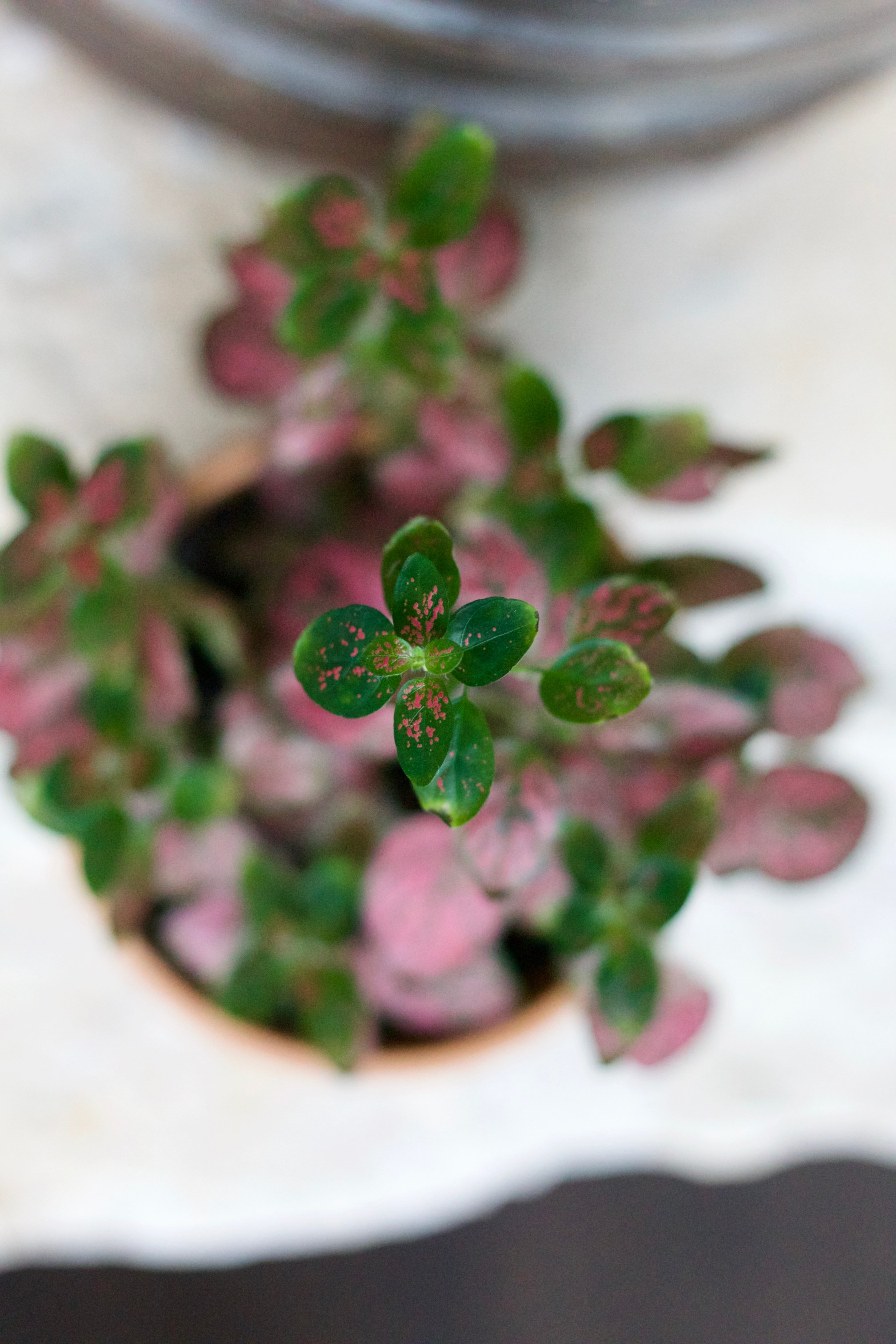
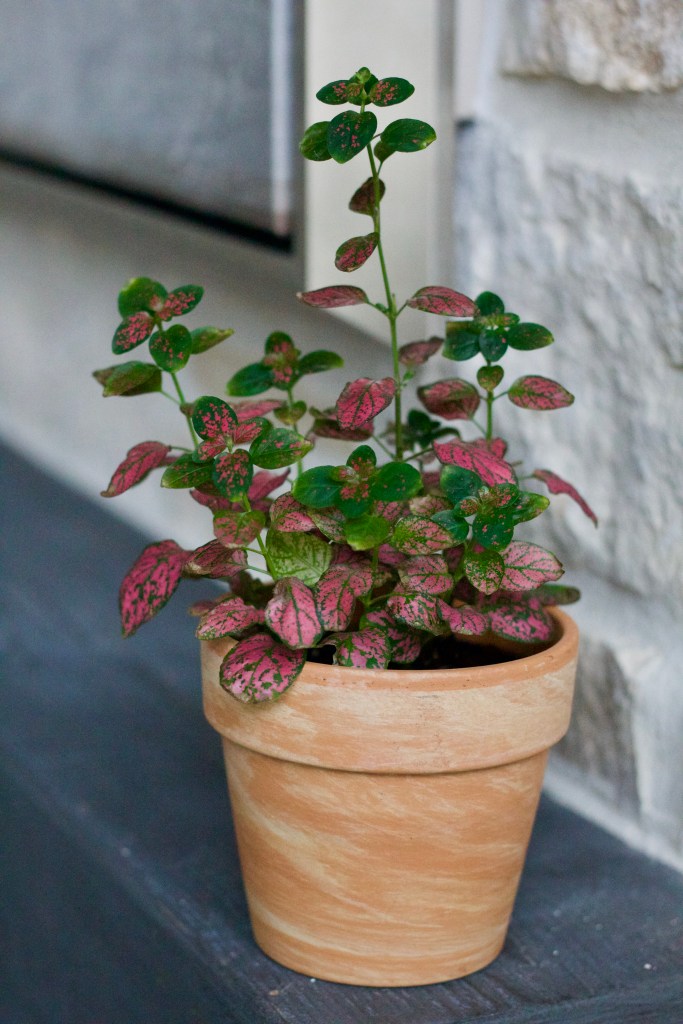
This cute little plant comes in a wide variety of colors including pink, purple, scarlet, lavender, white, and green speckled leaves. Sometimes this plant is referred to as the freckle face plant because of its spotted appearance. This lovely plant can be grown as ground cover in temperate and warm zones but is very well suited for indoor growth as well. 

Light: 

Unlike some other plants, this one will produce the best speckled color if grown in low light situations but also dies well in bright indirect light. By keeping it in lower light, its freckles will stand out and the risk of burning the leaves are drastically reduced. If the plant is kept in too low of light it might revert back to plain ole’ green. Feel free to move it around and see what it likes best.

Watering: 

Water once the top 1”-1.5” is dry. In my experience this plant can wilt easily so it is a good idea to keep the soil moist but not soaking wet. If the soil is kept soggy for too long the leaves will begin to turn yellow and root rot will occur.

Humidity:

Higher humidity works wonders for these little guys. You can get a humidity tray or a small humidifier to keep the relative humidity in the room to above 50%. Another easy way to increase humidity for your plants but keep you from sweating is to group your plants together to trap all the humidity around them.

Temperature: 

If grown as a part of your indoor jungle, make sure to provide it with a temperature of at least 60 F or 16 C. In just the right conditions your Polka Dot Plant might produce small flowers and ultimately seeds. These seeds will germinate in warm moist soil with a temperature of at least 70-75 F or 21-27 C.

Fertilizer:

It is a good idea to feed your plants in the spring and summer once a month. That will encourage growth before the plant rests in the winter months.

Toxicity: 

Polka Dot Plants are safe to animals and humans! Feel free to grow as many as you like, wherever you like!

Bonus: 

If your plant seems to be getting leggy which can happen because of its low light location, not to worry! Just pinch off the tall stems, by doing so you will encourage more growth which will eventually give you a fuller bushier plant.

Monstera Deliciosa

Intro:

Monstera Deliciosa have exploded in popularity recently. It seems like this interesting tropical plant is the subject of many instagram posts. This plant was on the top of my Plant Wish List for so long! It has a beautiful deep green color while its newest leaves are a bright and supple green. As your plant ages its leaves develop these wonderful splits and holes creating a whimsical addition to your jungle.

Light:

These guys are super versatile! They can grow almost anywhere you have space in your house. Like most plants, it can grow in low light conditions but will grow much faster in a brighter location. Too much direct sunlight can burn the leaves so if you set yours in a south facing window just keep your eye on it. 

Watering:

The Monstera Deliciosa is very tolerant where water is concerned. Monitor your soil and when the top inch to two inches becomes dry water your thirsty plant while attempting to avoid wetting the foliage. Your plant can deal with drought fairly well so you don’t have to stress too much about keeping a watering schedule. After you water remove any water that has flowed out of the pot to prevent root rot.

Humidity:

A higher humidity can help your Monstera grow big and strong. A good idea is to gently mist your prized plant once a week. It is a good idea to mist your Monstera in the morning or early afternoon to give plenty of time for all that water to evaporate before evening. Sometimes I put mine in the bathroom and turn the shower on. They get a nice steamy facial before I put them back in their respective locations.

Temperature:

Monstera’s can tolerate a fairly wide range of temperatures. It will do nicely in whatever temperature is comfortable for you and your thermostat. As a typical rule of thumb, plants grow faster in slightly warmer conditions.

Fertilizer:

In the spring and summer you can feed your plant once each month. This will promote growth and healthy roots. There is no need to feed in the winter when it is cooler. This will give your plant time to rest and prepare for the next growing season.

Toxicity:

The beautiful leaves of a Monstera are mildly toxic to humans and our furry family members. If you or your pet eats part of a Monstera Deliciosa, irritation in the mouth and stomach could occur along with possible vomiting.

Bonus:

This plant has big beautiful leaves that are great dust collectors. As you notice dust and dirt, take a damp cloth and wipe the leaves gently to keep them clean. This will allow your plant to efficiently produce all the energy it needs.

String of Pearls

I love these succulents so much! My mother gave me one she had and I have looked after it ever since. They look so delicate as they cascade off the edge of the pot. Truly an elegant plant. This is a trailing plant so once its tendrils reach the ground or the windowsill in my case, I take a sharp pair of scissors and give them a trim. All you have to do to keep a full pot is strip off the top couple pearls and stick it back in the pot. Easy as that.

Light:

String of Pearls can grow in so many places! I have moved mine around a lot in the past couple of months and they are doing great. These little pearls do best with bright light. Be careful how much direct light they get, if they get too much the pearls can change color or shrivel up and die.

Watering:

This is considered a succulent plant and is incredibly drought tolerant. In the spring and summer you can manage by giving these guys a good soak one week and then let it sit around for another week or two. In the winter you can cut waterings to once per month. It is very important to have well-draining soil like a cacti mix with the String of Pearls. If they sit in wet soil too long they will develop root rot.

Humidity:

String of Pearl is a succulent so you don’t have to worry about humidity much at all. It can tolerate average to dry conditions with no issue. Be mindful to keep it away from cold drafts as it might limit growth.

Temperature:

The average indoor temperature for a String of Pearls should be around 72 degrees Fahrenheit or 22 degrees Celcius. This will suit it well all through its growing season. When it begins to go dormant you will need to cool the temperatures down to between 50 and 55 degrees Fahrenheit or 10-13 degrees Celsius.

Fertilizer:

Succulents like this one don’t usually need a lot of fertilizer and too much could even kill the plant. During its growing season which is spring and summer, you can fertilize once every 2 to 4 weeks. No need to worry about fertilizer in the fall and winter! Make sure your fertilizer is diluted so as not to shock the plant.

Toxicity: 

Even though this plant looks pretty, it is somewhat toxic to pets and children. Take care to place this out of reach of little paws and fingers.